TL;DR: Ranking the best forex brokers Nigeria 2026 has to offer, Exness wins — NGN base accounts, naira bank transfers via local payment partners, withdrawals in minutes, spreads from 0.3 pips. Runner-up: HFM — the strongest local footprint (NGN accounts, deposit accounts at Zenith, Access, First Bank, GTB), $0 minimum on most accounts. Lowest spreads: IC Markets (Raw from 0.0 pips + $7 round-turn commission) — but no NGN base and a $200 minimum. Beginner pick: XM ($5 minimum, 100% deposit bonus). Safest company: Pepperstone (deepest regulation, no NGN base — conversion on you). Budget pick: FBS ($1 Cent accounts, up to 1:3000 leverage — powerful and dangerous).
Verdict first: which broker should a Nigerian trader actually open?
Picking the best forex brokers Nigeria has available is really two decisions. First: can you get naira in and out cheaply? A broker with world-class spreads is dead weight if funding it means wiring dollars abroad and eating a conversion haircut every time you move money. Second: who actually holds your account? Here’s the uncomfortable truth — neither the SEC Nigeria nor the CBN licenses retail forex margin brokers, so every broker on this list onboards you under an international entity. Any Nigerian site claiming a broker is “CBN regulated” is selling you something. The offshore entity named in your client agreement is the only regulation that applies to your money.
We ranked six brokers on what actually differs for a Lagos, Abuja, or Port Harcourt trader: real naira funding rails (local bank transfer, Nigerian-issued cards, NGN base accounts), withdrawal speed, mobile-first UX — most Nigerian retail traders are phone-only — and which legal entity your account lands under. The naira’s ride matters too: at roughly ₦1,330 to the dollar officially and ₦1,370–₦1,390 at street rate as of October 2026 (down from ~₦1,470 highs in late 2025), every conversion carries a fee you feel.
Our pick is Exness. NGN base accounts, naira deposits through local payment partners straight from GTB, Zenith, Access or any Nigerian bank, Nigerian-issued debit cards, instant withdrawals, and a $10 minimum (about ₦13,300 at today’s rate). Spreads from 0.3 pips on Standard, 0.0 on Raw/Zero — and it holds up for gold, which half of Nigeria seems to trade.
HFM takes second on the strength of its Nigerian footprint: NGN accounts, its own local bank deposit accounts at Zenith, Access, First Bank and GTB, ₦4,000 minimum via bank transfer, and $0 minimums on most accounts. XM ($5 minimum, 100% deposit bonus) is the best front door for true beginners. IC Markets wins on raw cost but funds only in dollars. Pepperstone is the broker we’d hand someone who asks “which company is safest?” — and then warn about the conversion fees. FBS is the cheapest way in, with the weakest regulator.
Disclosure: this page may earn us a commission when you open an account through links on it — it doesn’t change our rankings or cost you anything extra. See the full disclosure at the bottom.

- Verdict first: which broker should a Nigerian trader actually open?
- How we ranked the best forex brokers Nigeria 2026 shortlist
- Best forex brokers in Nigeria 2026 — comparison table
- 1. Exness — best overall for Nigerian traders
- 2. HFM — best local presence and account choice
- 3. XM — best for beginners and small accounts
- 4. IC Markets — best for lowest spreads
- 5. Pepperstone — best regulated, weakest for naira funding
- 6. FBS — cheapest entry point
- How to choose: the Nigerian trader’s checklist
- Frequently asked questions
- Final verdict
How we ranked the best forex brokers Nigeria 2026 shortlist
- Funding-rail verification. Which brokers genuinely offer NGN base accounts, local naira bank transfers, or Nigerian-issued card support — not just “Africa” in general. We weighted this heavily, because it’s the single biggest differentiator for Nigerian traders.
- Regulation honesty. Which licenses the group holds and which entity a Nigerian resident’s account actually opens under. An FCA license doesn’t protect you if your account is legally held by a Seychelles or St. Vincent subsidiary — we name the entity every time.
- Cost testing. Typical EUR/USD spreads per account type, commissions, and the hidden conversion cost for USD-only brokers. Every number below comes from broker-published figures or 2026 reviews; where we couldn’t confirm something, we say so outright.
- Mobile-first UX. Most Nigerian retail traders are phone-only, so MT4/MT5 mobile apps and solid broker apps score points.
- Account types and minimums. We favor genuine low-deposit accounts — the typical Nigerian first deposit is a few thousand to tens of thousands of naira.
We excluded FXTM and Octa from the main six. Both accept Nigerians and Octa offers NGN accounts, but they lost this particular scorecard on all-in cost and funding depth — and we couldn’t independently verify their current cashiers as of October 2026. Honorable mentions, not bad brokers.
Best forex brokers in Nigeria 2026 — comparison table
| Broker | Regulation (your entity as a Nigerian resident) | Min deposit | EUR/USD typical spread | NGN funding | Standout feature |
|---|---|---|---|---|---|
| Exness | FCA, CySEC, FSCA, FSA Seychelles, FSC BVI; Nigerian accounts under the offshore entity | $10 (~₦13,300) | From 0.3 pips (Standard); from 0.0 (Raw/Zero) | NGN base accounts; local bank transfer, Nigerian cards, Skrill/Neteller, USDT | Best naira plumbing + fastest withdrawals |
| HFM | FCA, FSCA, CySEC, DFSA; Nigerian accounts under HF Markets (SV) Ltd, St. Vincent | $0 (most accounts); ₦4,000 via bank transfer | From 1.0 pips (Premium); from 0.0 + $6 RT commission (Zero) | NGN base accounts; local deposit accounts at Zenith, Access, First Bank, GTB | Strongest local footprint |
| XM | CySEC, ASIC, DFSA, FSCA; Nigerians under XM Global (Belize FSC) | $5 (~₦6,650) | From 0.8 pips (Ultra Low); ~1.6 pips (Standard) | NGN deposit currency in the cashier; cards, bank transfer, Skrill/Neteller | Best small-account package |
| IC Markets | ASIC, CySEC, FSA Seychelles; Nigerians under IC Markets Global (Seychelles) | $200 (~₦266,000) | From 0.0 pips + $7 round-turn commission (Raw) | Cards, bank wire, PayPal, Skrill/Neteller — no NGN base, no local bank rails | Lowest all-in trading costs |
| Pepperstone | ASIC, FCA, CySEC, DFSA, SCB Bahamas; Nigerians onboard under the Bahamas entity | No fixed minimum (~$10 sensible floor) | From 0.0 pips + commission (Razor); ~0.77 pips (Standard) | Cards, bank transfer, PayPal, Skrill/Neteller, USDT — no NGN base; conversion at spot minus up to 1% | Deepest regulation stack |
| FBS | CySEC, ASIC group; Nigerians under FSC Belize entity | $5 (~₦6,650); Cent from $1 | From 0.9 pips (Standard) | NGN accounts available; local Nigerian bank deposits, cards, Skrill/Neteller | Cheapest entry point |
1. Exness — best overall for Nigerian traders
Exness is the broker this scorecard was built around — the only one here that treats Nigeria as a first-class market rather than an afterthought. You can hold your account in naira, deposit in naira, and get your money back in naira. Online bank transfer runs through Exness’s local payment partners: you pick your bank in the cashier, move the money from your GTB/Zenith/Access app, and it typically lands in minutes. Nigerian-issued debit cards work too, alongside Skrill, Neteller, Perfect Money, and USDT for crypto-native traders.
Withdrawals are where Exness really earns the top spot: they’re processed automatically, 24/7, with no manual finance-team bottleneck. For a Nigerian trader who’s been burned by five-day withdrawal purgatory elsewhere, that alone is worth the pick. Minimum deposit is $10 — roughly ₦13,300 at today’s rate — and Exness charges no deposit fees.
Trading conditions are properly competitive: Standard floats from 0.3 pips with zero commission, Pro from 0.1, Raw Spread from 0.0 with a small per-side commission, and Zero holding 0.0 pips on majors most of the day — including gold, which Nigerians trade heavily. Leverage runs up to 1:2000 under the offshore entity; keep it at 1:100 or below unless you enjoy donating capital.
The honest caveat: your account sits under Exness’s offshore entity, not its FCA or CySEC arms. No compensation scheme covers you. That’s the trade you’re making — and given every broker on this list has the same catch, it’s the best version of it.
Pros
– NGN base accounts with real naira funding: local bank transfer, Nigerian cards, e-wallets, USDT
– Instant automated withdrawals, 24/7
– Spreads from 0.3 pips (Standard) to 0.0 (Raw/Zero); strong on gold
– $10 minimum — about ₦13,300 — and zero deposit fees
Cons
– Nigerian accounts held under the offshore entity, not the FCA/CySEC arms — no compensation scheme
– Absurd leverage (up to 1:2000) is dangerous in inexperienced hands
Not for you if: you need a tier-1 license covering your actual account, or you want deep research and education — Exness is an execution machine, not a classroom.
2. HFM — best local presence and account choice
HFM (formerly HotForex, founded 2010) has been doing business with Nigerians longer than most of its rivals, and it shows. It offers NGN-denominated trading accounts, and — unusually — maintains its own Nigerian bank accounts at Zenith, Access, First Bank, and GTB specifically for client deposits. You transfer naira to one of those accounts with your myHF ID as the reference, and the funds land in your myWallet for internal transfer to a trading account. The ₦4,000 minimum via local bank transfer is pocket money. Most accounts have no minimum at all.
The account menu is the widest here: Premium (spreads from ~1.0 pips), Pro (from 0.5, ₦50,000 to open), Zero (0.0 spreads with $6 round-turn commission, no minimum), Cent (micro-lot trading for learners), plus copy trading and swap-free Islamic options. Platforms are MT4, MT5, and the HFM Trading App, which handles chart trading plus deposits and withdrawals from your phone.
Regulation: the group holds FCA, FSCA, CySEC, and DFSA licenses, but Nigerian residents open under HF Markets (SV) Ltd in St. Vincent and the Grenadines — the standard offshore caveat applies, again with no compensation scheme.
Pros
– Genuine Nigerian footprint: NGN accounts plus local deposit accounts at four major Nigerian banks
– ₦4,000 minimum via bank transfer; $0 minimums on most accounts
– Deepest account menu here — Cent, Premium, Pro, Zero, copy trading, Islamic
– Leverage up to 1:2000; crypto deposits also accepted
Cons
– Standard-account spreads from ~1.0 pips are mid-pack — the Zero account is where the value is
– Nigerian accounts sit under the St. Vincent entity, not the FCA/FSCA arms
Not for you if: you only trade majors and want the absolute tightest all-in cost — IC Markets’ Raw account beats HFM’s on pure math.
3. XM — best for beginners and small accounts
XM has onboarded retail traders since 2009 and remains one of the friendliest front doors for Nigerians: a $5 minimum (roughly ₦6,650), spreads from 0.8 pips on the Ultra Low account, and a 100% deposit bonus (up to $1,000) padding your margin on Standard and Micro accounts. For a ₦10,000–₦50,000 starter account, that bonus meaningfully extends the learning runway — just read the terms first, since bonus credit can’t be withdrawn directly.
The cashier supports NGN as a deposit currency with cards, bank transfer, and Skrill/Neteller. One honest flag: multiple 2026 reviews disagree on whether NGN is available as a base account currency on the entity Nigerians get, so confirm what’s offered before you fund — if your account ends up USD-denominated, your conversion cost returns. Our full XM pros and cons breakdown covers the account types in detail.
On regulation: the group holds CySEC, ASIC, DFSA, and FSCA licenses, but Nigerian residents open under XM Global Limited, regulated by the FSC in Belize. XM’s education library is the strongest of the six, which is the real reason beginners land here.
Pros
– $5 minimum and a genuine 100% deposit bonus — the best small-account package here
– NGN supported as a deposit currency; strong education library and webinar program
– Since 2009 with a clean operational record at scale
Cons
– Nigerian accounts sit under the Belize entity; no compensation scheme
– Standard spreads (~1.6 pips) are wide by modern standards — use the Ultra Low account or pay for the bonus in spread
– NGN base-currency availability is unclear — confirm in the cashier before depositing
Not for you if: you’re a high-volume trader where per-trade cost dominates — the wider Standard spreads quietly eat more than any bonus gives back.
4. IC Markets — best for lowest spreads
IC Markets is the broker cost-obsessed traders benchmark everything else against. Its Raw Spread account runs from 0.0 pips with a $7 round-turn commission per lot — the tightest all-in cost in retail forex — with true ECN execution and deep liquidity. Scalpers and EA traders live here for a reason, and our lowest-spread brokers roundup explains how the math works against commission-based pricing.
So why fourth? On a scorecard built for Nigerian traders, the plumbing is the problem: no NGN base currency, no local bank rails, no Nigerian-friendly funding beyond the international staples — cards, bank wire, PayPal, Skrill, Neteller. Every naira passes through a conversion before it becomes trading margin, and at ₦1,330+ per dollar those conversions add up fast. The $200 minimum (~₦266,000) is also the highest on this list by a wide margin.
Regulation is solid: ASIC, CySEC, and the FSA Seychelles entity (IC Markets Global) that onboards Nigerians. Leverage runs up to 1:500 under that entity. No deposit or withdrawal fees from the broker’s side.
Pros
– Lowest measured EUR/USD costs of any broker here; true ECN execution
– ASIC + CySEC group licenses; up to 1:500 leverage; no funding fees
Cons
– No NGN base currency or local bank rails — every deposit converts from naira
– $200 minimum — 40x the entry cost of XM; no bonuses or promos
Not for you if: you fund from a Nigerian bank account in naira, or you’re starting small. Pick Exness or HFM instead and stop thinking about it.
5. Pepperstone — best regulated, weakest for naira funding
Pepperstone is the broker we’d hand to a trader who asks “which company is the safest?” Licenses include ASIC, FCA, CySEC, DFSA, BaFin, CMA, and SCB (Bahamas) — the deepest bench here. Nigerian residents onboard under the SCB Bahamas entity, with leverage up to 1:200 on forex there. Razor pricing runs from 0.0 pips with a per-lot commission (roughly $7 round-turn equivalent), the no-commission Standard account averages around 0.77 pips, and you get MT4, MT5, cTrader, and full TradingView execution. Read our Pepperstone pros and cons for the full breakdown.
The catch for Nigerians is funding. Pepperstone accepts USD, GBP, EUR, and a handful of other base currencies — NGN is not one of them. You’ll fund a USD account by card, bank transfer, PayPal, Skrill, Neteller, or USDT, and every naira-to-dollar movement goes through conversion. Pepperstone’s own conversion runs at the spot rate minus a fee of up to 1% — relatively steep — on top of whatever your bank charges. If you move money regularly, that friction compounds fast.
Pros
– Strongest multi-jurisdiction regulation in this lineup; Razor pricing rivals IC Markets
– MT4/MT5/cTrader plus full TradingView execution; no fixed minimum deposit
– No deposit or withdrawal fees from the broker
Cons
– No NGN base currency or local bank rails — USD funding only
– Conversion at spot minus up to 1% falls entirely on you
– No deposit bonuses or promos
Not for you if: you fund from a Nigerian bank in naira and move money regularly — the conversion friction will annoy you within a month. Exness or HFM fit better.
6. FBS — cheapest entry point
FBS is the broker with the lowest barrier to entry anywhere on this list: Cent accounts open from $1, Standard from $5 (about ₦6,650). It’s one of the most recognizable forex brands among Nigerian beginners: simple accounts, MT4 and MT5, local Nigerian bank deposits, cards and Skrill/Neteller, NGN accounts, plus frequent promotions, cashback, and a no-deposit “Level Up” bonus.
The Standard account floats from about 0.9 pips with no commission — respectable, not remarkable. Leverage runs up to 1:3000, which is frankly irresponsible as a default and you should treat it as decoration. Regulation is the weakest here: the group carries CySEC and ASIC licenses alongside the FSC Belize entity that Nigerian accounts land under, and the Belize entity is what governs your money.
FBS is the right pick for one specific trader: someone with almost no capital who wants to learn on a live account for the price of lunch, using the Cent account to make $5 behave like 500 cents of practice money.
Pros
– $1 Cent / $5 Standard minimums — the cheapest live-account start here
– Local Nigerian bank deposits plus NGN accounts; MT4/MT5 and a decent mobile app
– Regular promos, bonuses, and cashback for small accounts
Cons
– Weakest regulation in this lineup — Nigerian accounts sit under the Belize entity
– Spreads from 0.9 pips are mid-pack; promotions can’t be withdrawn, only traded
Not for you if: your balance has grown past “practice money” — at that point the Belize entity and mid-pack spreads argue for moving to Exness or HFM.

How to choose: the Nigerian trader’s checklist
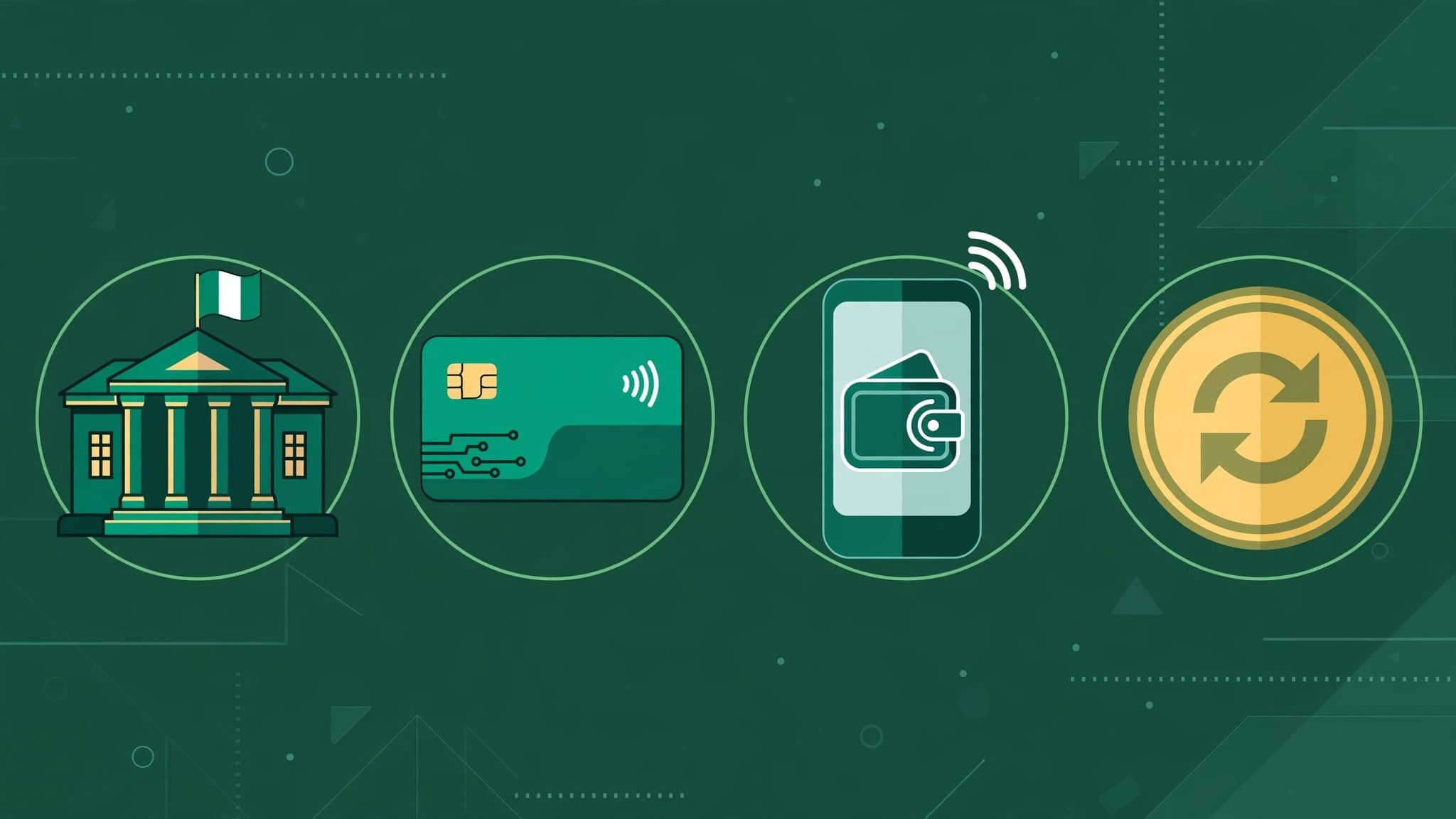
Start with the cashier, not the spreads. Open the broker’s deposit page before you register and check what’s actually offered for Nigeria: NGN base currency, local bank transfer, Nigerian-issued cards. Exness and HFM win this category decisively. A broker with 0.0 spreads that can’t take your naira is a spreadsheet, not a trading account.
Read the client agreement for the entity name. Every broker here onboards Nigerians under an offshore entity — the SEC Nigeria and CBN don’t license retail forex margin brokers. You’re choosing between offshore entities, so at least know which one holds your money: St. Vincent (HFM), Seychelles (Exness, IC Markets), Bahamas (Pepperstone), Belize (XM, FBS).
Do the conversion math once. If your broker is USD-only (IC Markets, Pepperstone), every deposit and withdrawal passes through a conversion. At ~₦1,330 per dollar with a wobbling naira, a 1% conversion fee on a ₦200,000 deposit is ₦2,000 gone before you’ve placed a trade. That’s a hidden spread on your capital.
Match the account to your capital. Under ~₦50,000: Exness Standard, XM, or FBS Cent. ₦50,000–₦500,000: Exness Raw/Zero or HFM Zero once you know what you’re doing. Above that: IC Markets Raw for cost, Pepperstone for the regulation stack — but only if you’ve accepted the conversion friction.
Go mobile-first. Most Nigerian retail traders trade exclusively on their phones. MT4 and MT5 mobile apps work fine, and Exness, HFM, and FBS run competent proprietary apps that handle deposits and withdrawals too. If a broker’s app can’t move your money, the trading app doesn’t matter.
Ignore the leverage marketing. Exness, HFM, and FBS all advertise headline leverage (1:2000, up to 1:3000). Treat anything above 1:100 as a trap for beginners. Our beginner tips cover position sizing properly — read that before touching leverage.
USDT is a legitimate funding rail. Nigerian traders increasingly fund via USDT to sidestep bank delays and conversion chains. Exness, HFM, and Pepperstone all accept it — our crypto deposit guide covers the details.
Beware the “CBN regulated” myth. No broker on any Nigerian comparison site is regulated by the CBN for retail forex. Lists claiming otherwise are playing on trust. The defense is simple: verify the license number on the actual regulator’s website, and confirm the site accepts Nigerian clients.
Frequently asked questions
Is forex trading legal in Nigeria?
Yes — trading forex through international brokers is not prohibited, and the CBN has not blocked Nigerians from using offshore brokers. But no broker is licensed by the SEC Nigeria or CBN to offer retail forex margin trading, so your account is always held under a foreign entity.
Can I fund my forex account directly in naira?
Yes, at Exness and HFM — both support NGN base accounts and naira bank transfers (HFM runs its own deposit accounts at Zenith, Access, First Bank, and GTB; Exness routes through local payment partners). XM supports NGN as a deposit currency. IC Markets and Pepperstone are USD-only: you’ll deposit by card, wire, or e-wallet and eat the conversion. As of October 2026 we could not confirm any major broker offering direct USSD-code deposits; in practice you move the naira from your bank’s app or USSD to the broker’s local partner account, which is effectively a bank transfer.
Which broker has the lowest minimum deposit in Nigeria?
HFM (no minimum on most accounts; ₦4,000 via local bank transfer) and FBS (Cent from $1, Standard from $5) are the cheapest entries. XM starts at $5 and Exness at $10 (~₦13,300 at today’s rate). IC Markets’ $200 (~₦266,000) is the highest on this list by far.
Can I trade on my phone in Nigeria?
Yes — and most Nigerian retail traders do exactly that. Every broker here supports the MT4 and MT5 mobile apps, and Exness, HFM, FBS, and XM all offer proprietary mobile apps that handle charting, trading, deposits, and withdrawals. You need nothing more than a decent Android phone and a data connection.
Do these brokers offer swap-free (Islamic) accounts?
Yes — swap-free accounts are standard across this lineup and available on request, which matters for Nigeria’s large Muslim trading community. Availability varies by account type and entity, so request it during registration rather than after funding.
Which broker withdraws fastest to a Nigerian bank?
Exness — its automated withdrawal system processes around the clock and naira withdrawals typically land within minutes to hours. HFM’s local-bank withdrawals are also fast within Nigerian banking hours. Always test with a small withdrawal before scaling up your balance: it’s the cheapest due diligence in forex.
Final verdict
For most Nigerians reading this in 2026, the answer is Exness: naira in, naira out, instant withdrawals, competitive spreads, and a $10 minimum that anyone can reach. HFM is the best alternative — its local banking footprint and account menu are genuinely unmatched, and its ₦4,000 entry is the lowest meaningful minimum here. XM remains the best classroom for beginners who want education alongside a $5 start. IC Markets and Pepperstone are excellent brokers wearing the wrong funding shoes for naira traders — brilliant if you already operate in dollars, annoying if you don’t. FBS is the practice-money pick: fine for learning on a $5 Cent account, not where serious capital should sit.
Whichever you choose, fund with money you can afford to lose, test a withdrawal early, and ignore anyone promising guaranteed returns — in Nigeria’s forex scene, that promise is the scam.
Risk warning: Forex and CFDs are leveraged products that carry a high risk of losing money rapidly. Between 74–89% of retail investor accounts lose money when trading CFDs with these providers. You should consider whether you understand how CFDs work and whether you can afford to take the high risk of losing your money. Past performance is not a reliable indicator of future results. Nothing on this page is financial advice.
Affiliate disclosure: ForexCryptoHub may earn a commission when you click links to brokers and open an account. These commissions help keep the site running and do not influence our rankings — brokers cannot pay for placement. We may also hold accounts with some of the brokers reviewed. Always verify fees, spreads, and terms directly with the broker before depositing, as conditions change.